
What Are Cloud-Based ERP Solutions Usually Offered As?
The usual cloud ERP offering in one sentence
Cloud-based ERP solutions are usually offered as software subscriptions that you access over the Internet through a web browser or application, without requiring installation on local computers. Cloud ERP is enterprise resource planning software delivered over the Internet, allowing you to manage core business processes from different locations without relying on a locally installed system.
Cloud delivery describes how cloud ERP is hosted and accessed, not the complete buying decision for a discrete manufacturer. It does not, by itself, establish whether the system supports configured products or outsourced work-order operations. Evaluate those manufacturing questions separately.
What cloud delivery changes for an operations manager
Cloud delivery changes the starting point for evaluating access and infrastructure. A cloud ERP system is hosted on a vendor’s servers and accessed through the Internet, commonly through a browser or dedicated application. Users may access the system from desktop computers, mobile devices, or remote worksites without installing the ERP locally.
An operations manager should evaluate more than whether employees can open a login page. You need to understand what the proposed arrangement means for your facilities, users, data, and internal responsibilities. Ask the vendor to explain:
- Where the service is hosted and which organization operates the relevant infrastructure.
- How employees, supervisors, planners, and other authorized users access the system from your sites or approved remote locations.
- Which parts of the environment your organization controls and which parts the vendor or another service operator manages.
- How the proposed arrangement handles your existing integrations and operational data.
NIST distinguishes cloud deployment models partly by who has exclusive access to infrastructure and computational resources, and by whether management remains internal or is outsourced. That distinction gives you a useful responsibility map, but the vendor must apply it clearly to the service under consideration.
A cloud label therefore moves several questions earlier in the evaluation. You should clarify access, hosting, data handling, and integration ownership before treating the system as a fit for daily production work. Do not assume that a browser-based experience answers those questions.
How subscription, configuration, and shared data fit together
A cloud ERP subscription is the commercial and operating arrangement through which your organization uses the service. Organizations generally subscribe to cloud ERP services and configure the software to match their business requirements. The subscription model tells you how access to the software is arranged; it does not tell you whether the configuration reflects your assembled-product processes.
Configuration connects the system to the way your organization works. During evaluation, translate broad requirements into questions about the records and transactions your teams need to manage. ERP includes integrated software intended to manage processes across areas such as finance, human resources, supply chain, and manufacturing. Your evaluation should therefore cover the operational handoffs that matter to your company rather than assess the production screen in isolation.
Our guidance treats a centralized database as a single source of truth for business operations. Treat that description as an evaluation question: ask how the proposed system represents shared business information, how your teams access it, and which processes use the same operational record. Then connect the answer to your own requirements for planning, purchasing, production, inventory, orders, and finance. A shared database is a useful design objective, but it does not remove the need to test the specific transactions and integrations your organization depends on.
A cloud ERP evaluation should document the business requirements that configuration must address. For a discrete manufacturer, that means writing down the requirements that a vendor must demonstrate rather than treating subscription access as evidence of operational fit.
Separate cloud delivery from cloud deployment
Cloud delivery and cloud deployment describe related but different parts of an ERP decision. Cloud delivery addresses the way software is provided and accessed. Deployment describes the environment in which the cloud infrastructure and computing resources are made available. NIST identifies public, private, community, and hybrid cloud as deployment models.
The distinction matters because a cloud ERP product can still require you to clarify the deployment arrangement. SAP notes that some ERP software is cloud or SaaS only, while other vendors offer cloud, on-premises, and hybrid options. SAP also advises choosing software through a careful evaluation process and considering deployment options based on the software’s capabilities and your company’s needs, rather than using deployment as the sole selection criterion.
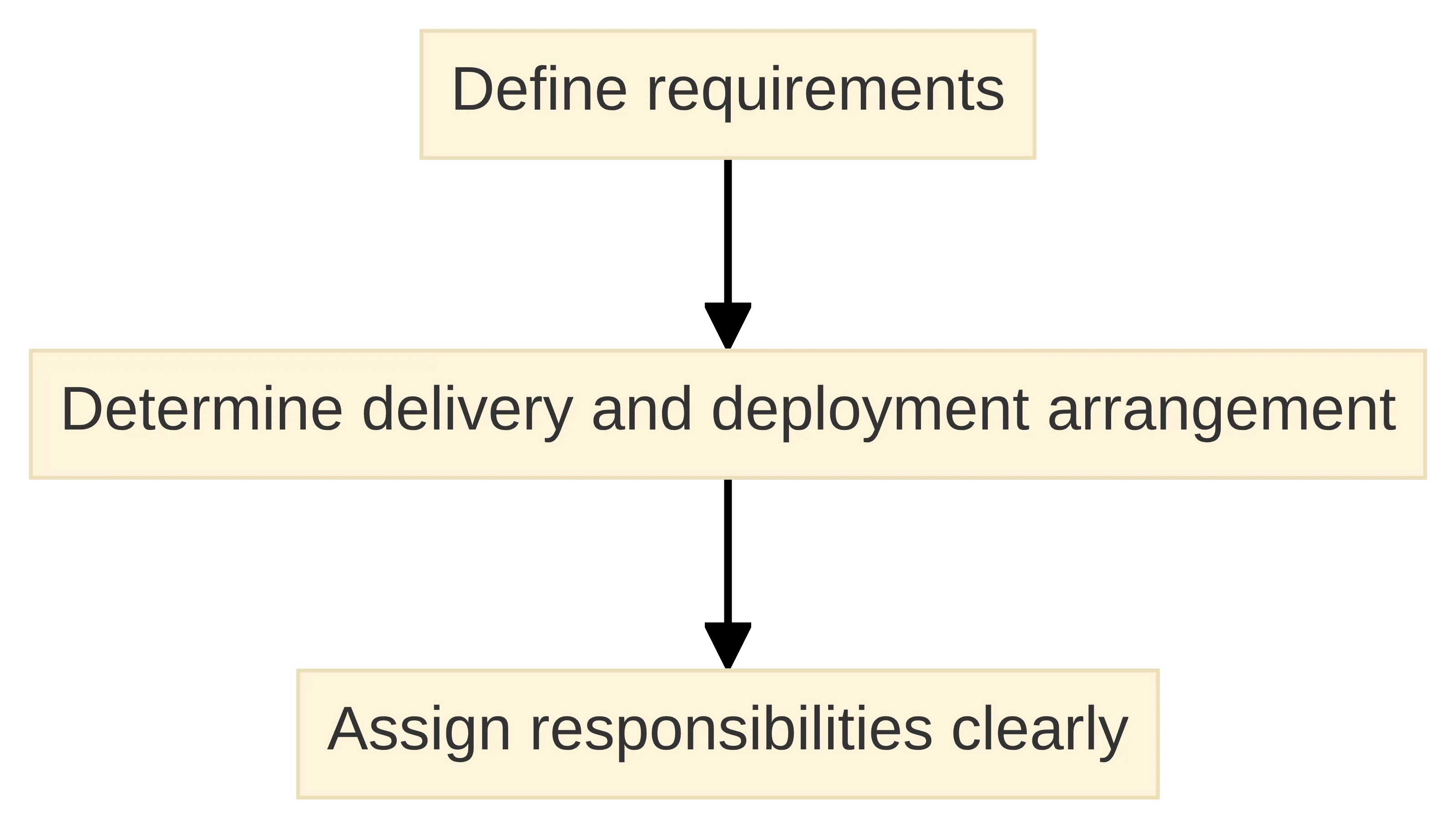
A sound cloud ERP evaluation uses a two-part sequence:
- Define the manufacturing, operational, integration, and data requirements the ERP must meet.
- Determine which delivery and deployment arrangement satisfies those requirements and assigns responsibilities clearly.
This sequence keeps you from treating a cloud label as a shortcut for software selection. It also keeps deployment questions visible without allowing them to replace the fit assessment.
What public, private, community, and hybrid cloud labels mean for ERP evaluation
Public, private, community, and hybrid cloud are NIST deployment-model terms. The terms describe how exclusive access to cloud infrastructure and computational resources is arranged, so they should prompt specific questions about the service proposed for your organization.
| Deployment model | What the definition establishes | What to clarify for your ERP evaluation |
|---|---|---|
| Public cloud | NIST describes public cloud infrastructure and computing resources as available to the general public over a public network and owned by an organization selling cloud services. | Ask how the proposed ERP service uses this model and which responsibilities remain with your organization. |
| Private cloud | NIST describes private cloud as giving one consumer organization exclusive access to and use of the infrastructure and computational resources. Management and hosting may remain internal or be outsourced. | Ask who manages the environment, where it is hosted, and how exclusive access applies to the proposed service. |
| Community cloud | NIST identifies community cloud as a deployment model. | Ask the provider to define the term for the specific ERP architecture and service arrangement under review. |
| Hybrid cloud | NIST identifies hybrid cloud as a deployment model. | Ask the provider to explain the environments involved, the boundary between them, and which responsibilities apply to each. |
The deployment label is therefore a starting point for clarification, not a complete description of your ERP arrangement. Ask for the actual hosting, access, management, and integration boundaries in plain language. Then compare those boundaries with your company’s requirements and operating responsibilities.
What to clarify about access, data, hosting, and integrations
Access, data, hosting, and integrations are four separate evaluation boundaries. A browser-based cloud ERP can make access straightforward while leaving the operating arrangement unclear. Resolve each boundary explicitly:
- Access: Ask which browsers or applications users will use, which locations and devices are supported, and how access works for people at plants, offices, warehouses, and approved remote worksites.
- Data: Ask how the system represents shared operational information and which business processes use the central record. Identify the data your organization must bring into the new system and the data that must continue to connect with other applications.
- Hosting: Ask where the service runs, who operates the infrastructure, and which tasks remain with your organization. NIST’s public and private cloud definitions make ownership, exclusivity, management, and hosting useful points of clarification.
- Integrations: List every current connection that touches ERP data or transactions. Treat each connection as a transition item rather than assuming that a cloud deployment will preserve it automatically.
Microsoft recommends documenting current integrations because each integration may need to be migrated or reconfigured during a cloud ERP transition. Build that inventory before a vendor demonstration. Include the systems used by operations, finance, purchasing, inventory, production, customer orders, and any other process that exchanges information with ERP.
The vendor’s answers should distinguish a general product description from an arrangement you can evaluate. Ask for a clear explanation of compatibility with existing systems and integrations, because Microsoft recommends verifying that compatibility before selecting a cloud ERP platform. Ask separately which compliance, security, and industry-specific requirements the proposed solution addresses. Keep those answers beside your requirements record.
A cloud ERP evaluation should produce a responsibility map, not just a preferred deployment label. You should be able to see what your team must prepare, what the vendor must provide, which integrations require work, and which questions remain unresolved before the option advances. Turn that map into a review record rather than leaving it as a general discussion. For each requirement, record the proposed arrangement, the party responsible, the answer or demonstration supplied, and the question that remains open. This structure lets the team distinguish a product statement from a confirmed fit. It also gives operations, IT, and finance the same object to review: operations can check whether the arrangement supports work at the plant, IT can check the access and integration boundary, and finance can check whether the information needed for financial processes is represented. For an integration, record the business process it serves, the systems involved, and whether the transition requires migration or reconfiguration. For an access requirement, record the user group, location, device or application path, and responsibility for managing the arrangement. If an answer depends on the deployment model or the scope being proposed, record that condition explicitly rather than treating the answer as universal. Do not mark an item complete merely because the vendor uses a deployment label or confirms browser access. Mark it complete when the explanation addresses the stated requirement and the responsible party is clear. Where the written answer is not enough, keep the item open for a demonstration or a follow-up question. This makes the next vendor discussion narrower and more useful: unresolved responsibilities and compatibility questions become visible instead of being buried in a general cloud overview.
Why cloud ERP does not prove discrete-manufacturing fit
Cloud ERP does not prove discrete-manufacturing fit because hosting and manufacturing functionality answer different questions. SAP advises evaluating software first and then considering deployment options based on the software’s capabilities and your company’s needs. That guidance supports treating cloud delivery as one selection criterion rather than as proof that an ERP handles assembled products.
Oracle describes its cloud manufacturing offering as supporting discrete manufacturing, including configured products executed to plan or to order and contract manufacturing of standard products executed to plan or to order. Oracle also describes production operations that can be set up, managed, executed, and costed in the cloud. Those statements show how a vendor can describe manufacturing scope; they do not establish that every cloud ERP offering supports the same processes.
A discrete-manufacturing evaluation should keep two records: one for the cloud arrangement and another for assembled-product functionality. A vendor can satisfy the first record while leaving the second incomplete. Advance only when the proposed system’s manufacturing behavior has been tested against your requirements.
Test assembled-product processes separately from hosting
Assembled-product processes need a separate demonstration and requirements review. Use the cloud arrangement as the setting for the test, not as the result of the test. Ask each candidate to show how its offering handles the manufacturing situations that apply to your company.
A focused checklist should include:
- Can the proposed system support standard products and configured products executed to plan or to order?
- Can it represent contract manufacturing of standard products executed to plan or to order, if your operation uses that model?
- Can a work order include one or more operations outsourced to a supplier providing specialized manufacturing services, if that boundary exists in your process?
- Can production operations be set up, managed, executed, and costed in the cloud in a way that matches your requirements?
- Which of these functions are included in the proposed ERP scope, and which require another system or an integration?
Oracle describes these capabilities for its cloud manufacturing offering. Use them as concrete evaluation questions, not as assumptions about another vendor’s product.
A vendor demonstration should be built around your own assembled-product scenarios. Show the vendor the relevant product, order, production, outsourcing, and costing requirements, then record what the system demonstrates and what still requires clarification. Keep the result separate from the hosting discussion so a successful login or browser experience does not substitute for manufacturing evidence.
An unresolved manufacturing answer should remain marked as unresolved. NIST’s evaluation guidance is intended to support comparison and planning, not to replace company-specific selection criteria. Your assembled-product requirements remain the boundary for the decision.
Bring operations, IT, and finance into the evaluation
Operations, IT, and finance should participate early in the cloud ERP evaluation. Microsoft recommends involving key stakeholders from IT, finance, and operations early so the organization develops a broader view of its needs. That participation helps you test the cloud arrangement from more than one responsibility boundary.
Each group should have a defined review task:
- Operations: Map the assembled-product processes, work-order steps, plant access needs, and information required for daily decisions.
- IT: Inventory current integrations, assess compatibility, and clarify hosting, access, data, and management responsibilities.
- Finance: Define the financial processes and objectives that the ERP must support, then identify the information needed to evaluate the subscription and transition arrangement.
Bring the three views together before selecting a short list. A cloud ERP subscription and a central data model affect more than the people who administer systems, so the requirements record should reflect the functions that use the information. Stakeholder participation also has a change-management purpose. Establish executive sponsorship from project initiation and communicate why the evaluation is being conducted, which requirements are being used, and how unresolved questions will be handled. Clear communication gives plant and office users a common explanation of the proposed change before a system is selected, while allowing operations to surface process concerns that may not appear in an IT inventory. Keep this communication tied to the requirements record rather than presenting cloud delivery as an automatic improvement. Review the record with operations, IT, finance, and the executive sponsor as requirements or responsibilities change. The aim is not for every stakeholder to decide technical architecture; it is for the people accountable for production, information, and financial processes to identify gaps before an option advances.
Use cloud guidance as a comparison framework, not a verdict
Cloud guidance gives you a comparison framework, not a verdict on which ERP your organization should select. NIST’s cloud-service evaluation document explains that its purpose is to support categorization, evaluation, comparison, and selection of cloud services, while also stating that it does not provide a prescriptive set of selection guidelines.
Your company should apply the framework to the questions it has already defined. Compare deployment responsibilities, access arrangements, data boundaries, integration work, and assembled-product functionality. Then record the conditions under which each option could meet your requirements. This approach keeps the analysis specific to your organization instead of treating a general cloud category as a recommendation. Include the system lifecycle in that comparison. NIST states that cloud-service evaluation guidance can support planning for migration, deployment, and retirement of relevant legacy systems. Add a lifecycle entry to the review record: identify what must be migrated, what must connect during deployment, and which legacy records or systems require a retirement decision. Separate the vendor’s responsibility for operating the proposed service from your organization’s responsibility for preparing data, defining requirements, reviewing integrations, and deciding how existing systems will be handled. This prevents the evaluation from ending at the point where a service can be accessed. It also gives the team a clearer basis for asking vendors how the proposed arrangement fits the transition work already identified, without treating general cloud guidance as a promise about a particular product.
A practical rule is simple: cloud delivery can earn an option a place in your evaluation, but only your requirements review can determine whether it deserves further consideration. SAP cautions that deployment options should not be the sole determinant for system selection, and Microsoft recommends checking compatibility with existing systems and integrations before selecting a cloud ERP platform.
Questions to resolve before advancing ERP research
A cloud ERP option should be translated into a written question set before you advance the research. Use the answers to identify open requirements rather than collecting general statements about cloud software.
Delivery and access questions should establish how the service will work for your organization:
- Is the proposed ERP cloud or SaaS only, or does the vendor offer other deployment arrangements?
- Where is the service hosted, and which organization operates the relevant infrastructure?
- How will employees at plants, offices, warehouses, and approved remote worksites access the system?
- Will users work through a browser, a dedicated application, or both?
- What local installation, if any, does the proposed arrangement require?
- Which responsibilities remain with your organization and which belong to the vendor or another service operator?
Data and deployment questions should define the environment and the operational record:
- How does the system provide a centralized record for the business processes in scope?
- Which organization has exclusive access to the infrastructure and computational resources in the proposed arrangement?
- If the service is described as public, private, community, or hybrid cloud, what does that term mean for this specific architecture?
- Who manages and hosts the relevant environment?
- What data must be prepared for the transition, and which operational records must remain connected to other applications?
Integration and requirements questions should connect the cloud proposal to your existing operations:
- Which current integrations must be migrated or reconfigured?
- How will the vendor verify compatibility with your existing systems and integrations?
- Which compliance, security, and industry-specific requirements must the platform address?
- What migration objectives will the evaluation measure?
- Which stakeholders from operations, IT, and finance will approve the requirements and review the answers?
Document the integrations before selection because Microsoft recommends doing so when each connection may need migration or reconfiguration during a cloud ERP transition.
Assembled-product fit questions should remain separate from hosting questions:
- Can the system support your standard and configured products executed to plan or to order?
- Can it support contract manufacturing or outsourced work-order operations if those processes apply to your business?
- Can it set up, manage, execute, and cost the production operations that your evaluation requires?
- Which manufacturing functions are part of the proposed ERP scope, and which depend on another system?
Keep these questions in a separate manufacturing-fit record. Cloud delivery answers how the service is provided; these questions test whether the system suits your discrete manufacturing operation.
The practical next step for a discrete manufacturer
For a discrete manufacturer, the usual cloud ERP offering is a vendor-hosted subscription accessed over the Internet, but that description is only the first filter. Build a requirements record covering access, data, hosting, integrations, deployment responsibilities, and assembled-product functionality. Involve operations, IT, and finance early, then ask vendors to demonstrate the processes your company must support. A qualified professional can help assess suitability for your organization’s specific requirements, but your documented requirements should remain the basis for advancing the evaluation.
Keep reading
Related articles
Free account
Create A Free Account
Get the clarity you need to make confident ERP decisions — without the sales pressure.
- Read every article (past & future)
- Compare ERP systems side by side
- Access exclusive guides, checklists, and cost breakdowns
- Stay current on industry updates and trends
Get expert guidance at no cost
Rather talk to a specialist?
Book a free call with one of our ERP specialists for a no-obligation needs assessment. We'll help you understand your options, cut through the noise, and figure out what actually makes sense for your business — before you ever talk to a vendor.
Book A Free Call